【TITLE & POSITION】Professor, Department Chair of Bioengineering
【ACADEMIC APPOINTMENTS】Vice Chairman and Secretary-General of the Chinese Microcirculation Society Shock and Hemorheology Committee; Vice Chairman of the Hair Medicine Branch of the Chinese Society of Integrative Traditional and Western Medicine; Member of the Hair Study Group of the Dermatology and Venereology Branch of the Chinese Medical Association; Standing Committee Member of the Skin and Health Education Professional Committee of the China Medical Education Association and Deputy Head of the Hair Collaboration Group; Young Member of the Biomechanics Committee of the Chinese Society of Biomedical Engineering; Vice Chairman of the Hair Medicine Branch of the Beijing Integrated Medicine Society; Vice Chairman of the Dermatology Branch of Chongqing Medical Association and Head of the Experimental Study Group; Vice Chairman of the Dermatology Branch of the Chongqing Society of Integrative Traditional and Western Medicine; Standing Council Member of the Chongqing Society of Biomedical Engineering and Chairman of the Biomechanics Committee. Serves as Guest Editor or Reviewer for over 70 SCI-indexed journals, including Nature, Science, and Cell; Associate Editor of Genes & Diseases; Young Editorial Board Member of Burns & Trauma and Theoretical and Applied Mechanics Letters; Founding Deputy Editor-in-Chief of Regenesis Repair Rehabilitation; and Editorial Board Member of Cell Organoids and International Journal of Dermatology and Venereology.
【CONTACT INFORMATION】E-mail: mingxing@cqu.edu.cn;
Website:https://bio.cqu.edu.cn/info/1264/5418.htm
【PERSONAL PROFILE】
Dr. Mingxing Lei graduated with a Ph.D. in Biomedical Engineering from Chongqing University in 2014 and served as a joint Ph.D. candidate and postdoctoral researcher at Chongqing University and the University of Southern California from 2011 to 2017. Awarded the titles of Chongqing Talent·Young Top Talent and Fellow of the International Vebleo Society. He has led over 10 national and provincial-level projects, including key research and development projects under the National Ministry of Science and Technology and National Natural Science Foundation projects. He has received more than 10 awards, including the Chongqing Science and Technology Progress First Prize and the 75th World Congress of Dermatology Albert Kligman Travel Award. He has published over 80 SCI-indexed papers in journals such as Nature, Science, Cell, and PNAS, with related findings cited more than 2,000 times in journals including Nature, Science, Cell, and PNAS, and featured in media outlets such as CNBC. He served as editor or co-editor for 5 academic special issues and contributed 4 book chapters. He has been invited to present at over 100 international and domestic academic conferences, and teaches undergraduate and graduate courses such as Stem Cells and Tissue Repair, Basic Immunology, Academic Norms and Thesis Writing, and Biomechanics and Biomedical Engineering.
【RESEARCH INTERESTS】
1. Self-organization and skin organoid formation. The transformation process from the dissociated multipotent stem or progenitor cells into an organized tissue is a poorly understood and yet fundamental issue in regenerative medicine. We haveestablished a skin organoid model to analyze the underlying molecular processes in detail. This can help us identify molecules thatpromote hair formation, which will further enhance the clinical application and treatment of patients with alopecia.
2. Control of hair cycling. The hair cycle transition is strictly regulated by the intrinsic and extrinsic molecular environment. We study the molecular mechanism by which how catagen–telogen-anagen transition is regulated.
3. Skin wound healing and dermatology. Thousands of people suffer from skin injuries and diseases, and even lose their lives without proper healing due to a failure ofthe barrier function. We develop methodologies and therapeutics for treating skinwounds and diseases.
【REPRESENTATIVE PUBLICATIONS】
1. Chuong CM*, Lei M*. Evolutionary insights into a skin fold.Nature (IF: 48.5). 2026; 651(8104):41-42
2. Lei M, Chuong CM. STEM CELLS. Aging, alopecia, and stem cells.Science (IF: 56.9). 2016; 351(6273): 559-60.
3. Chang WL, …Lei M, …Chuong CM. The Making of a Flight Feather: Bio-architectural Principles and Adaptation.Cell (IF= 64.5). 2019; 179:1409-1423.
4. Jiang J, Liu W, Wang M, Wang D, Wu W, Zhang M, Zhou S, Xiao Y, Lin X, Xiang X, An W, Zhao H, Zhan R, Yang L, Cai K, Luo G, Chuong CM*, Lei M*. Metabolic adaptation drives self-organization during skin organoid morphogenesis.Nature Communications (IF: 15.7). 2026; doi: 10.1038/s41467-026-71709-0
5. Lei M* et al., The mechano-chemical circuit drives skin organoid self-organization.Proc Natl Acad Sci U S A(IF:11.2), 2023. 120(36):e2221982120.
6. Lei M, Chuong CM. Epidermal Darwinism and Competitive Equilibrium within the Epidermis.Cell Stem Cell (IF: 23.9). 2018;23(5):627-629.
7. Lei M, Schumacher LJ, Lai YC, Juan WT, Yeh CY, Wu P, Jiang TX, Baker RE, Widelitz RB, Yang L, Chuong CM. Self-organization process in newborn skin organoid formation inspires strategy to restore hair regeneration of adult cells.Proc Natl Acad Sci U S A (IF: 11.2). 2017; 114: E7101-E10.
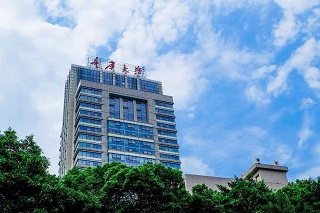

 Chongqing University